“In 1975 Ennio Morricone composed the music for Storie di Vita e di Malavita, the film with which director Carlo Lizzani followed up his investigation on youth deviance and crime in Milan. The opus documented the city’s lowlives, the malavita, based on a reportage by Marisa Rusconi, a pioneering author and journalist who could seamlessly move from investigative to lifestyle and fashion journalism, as witnessed by her work with the likes of Panorama, L’Espresso and Vogue.
As the soundtrack by Ennio Morricone finally resurfaced in its entirety from the CAM Sugar archive with its first-ever vinyl release on the occasion of Record Store Day, photographer Fabrizio Vatieri reimagines the film’s iconography in the streets of contemporary Milan.”
The Film:
“Storie Di Vita e Malavita” on blu-ray.Title shot.
Aka “The Teenage Prostitution Racket,” 1975’s “Storie Di Vita e Malavita” was directed by Carlo Lizzani, who also directed the excellent Italian crime picture “Wake Up & Kill” aka “Svegliati e Uccidi,” the Spaghetti Western “The Hills Run Red,” and the political drama “Mussolini: Ultimo Atto,” all of which, like this picture, feature stunning scores by the Maestro.
Album cover art.Album cover art.
Here is the synopsis of the film from the Amazon product description:
“Occupying a creepy cinematic netherworld somewhere between Eurocrime and erotica, Carlo Lizzani’s Teenage Prostitution Racket (Storie di Vita e Malavita) is an unapologetically sordid film that explores the troubled sexuality of a series of young women coming of age in 1970s Milan. Beginning on the outskirts of town, where a peasant woman pimps her thirteen-year-old companion to passing truck drivers, Lizzani s film worms its way into the metropolis, where the oldest profession, in its varied forms, is dramatized in a series of interlocking narratives. A working-class girl is lured into prostitution by a boyfriend; a rich girl uses sex to rebel against her wealthy parents; a photographer s model discovers sex is an unspoken requirement of her job; an ex-convent girl becomes a nymphomaniac after being seduced at school; an independent hooker relies on a vicious dog to defend her against a gang of mobsters. As sensational as the episodes may be, Lizzani doesn’t reduce the characters to mere sex objects. Instead, he endows each woman with enough depth that even the most voyeuristic viewer can t help but become invested in her struggles to survive, and share her resentment toward the shady characters who try to control her. Special Features: Documentary (Italian language with English subtitles) | fotogallery | Cut scenes.”
Still from “Storie Di Vita e Malavita.“
The Director:
Italian director Carlo Lizzani.Carlo Lizzani on IMDb.Director highlights from IMDb.
For his 1996 film Celluloide, which deals with the making of Rome, Open City, he received another David di Donatello award for his screenplay.[3]
While preparing for the film L’orecchio del potere (“The Ear of Power”, a project he cultivated since the late nineties with the title Operazione Appia Antica), Lizzani committed suicide in Rome at the age of 91, when he jumped from the balcony of his apartment in Via dei Gracchi on 5 October 2013.[1] On 10 October his coffin was transferred to a room in the Capitol that was set up as a funeral home, and the following day the civil funeral was held. Later, his body was transferred to the Flaminian cemetery for cremation.”
Italian director Carlo Lizzani.
Earlier Album Release:
Double CD release for “Storie Di Vita e Malavita” and “Un Delitto Inutile.“
Posters:
Carlo Lizzani Retrospective in 3 Films.
Links:
Listen to “SottoControllo” from Morricone’s score for “StorieDiVitaeMalavita” here:
Original Italian theatrical poster.Morricone closes his eyes and hears a symphony (or so I imagine!).Side A.Side B.Reverse album cover.Morricone blows his horn.elusivedisc.comelusive disc.com
Album write-up from elusivedisc.com:
“This is the soundtrack to SergioSollima’s Italian Spaghetti western film FacciaaFaccia (also known as FaceToFace), starring GianMariaVolonte, TomasMilian and WilliamBerger. Composed by the legendary EnnioMorricone, the 1967 movie’s music is a beautiful mix of typical epic ’60s Morricone western moods, experimental moments and even some sheer Country. The orchestra and chorus are directed by BrunoNicolai, the famous Italian film music composer. His work is featured in KissKiss…BangBang and KillBillVolume2 amongst many other movies.”
Kiss Kiss… Bang Bang.Kill Bill vol. 2.
Other Pressings:
“Faccia a Faccia” aka “Il Etais Une Fois Dans L’Arizona (“Once Upon A Time In Arizona”).
The Film:
Opening title card to Sergio Sollima‘s “Faccia a Faccia.”The perpetually smoldering icon of ’70s international cinema, Gian Maria Volonte.
British cult-auteur AlexCox is probably best known to movie lovers for his ‘80s classics “RepoMan,” and “Sid&Nancy,” but he is also one of the foremost authorities on all things SpaghettiWestern, as evidenced by his excellent compendium on the genre, “10,000 Ways To Die,” in which he provides a wealth of information and insight into the film and its production.
British director (and Italian Western scholar), AlexCox.Alex Cox’s “director’s take on the Italian Western.”AlexCox’s best works, “Repo Man” and “Sid & Nancy.”
Below is the transcript to AlexCox’sMoviedrome introduction to Sergio Sollima’s “FacciaaFaccia,” originally broadcast by the BBC on August 29th, 1993:
Cox introduces “FaceToFace” aka “FacciaaFaccia” on BBC’sMoviedrome program.
“Face to Face is one of three ‘political westerns’ by the Italian director Sergio Sollima, who sometimes operates under the pseudonym ‘Sterling Simon’. The other two were The Big Gundown, an excellent bounty-hunter movie starring Lee Van Cleef and Tomas Milian, and Run, Man, Run, a rather worse-than-mediocre sequel involving the further adventures of Milian. They were ‘political’ in much the same way as all the spaghetti westerns, setting up a rural/urban conflict in which the city dwellers are always insidious degenerates or usurous bankers, and the rural characters innocent exploitees, often championed by a glamorous social bandit. It’s a straight-forward, simple-minded view that you can find even in supposedly sophisticated Italian films, the most lumbering example perhaps being 1900.
Tomas Milian takes aim.
“Face to Face has been described as a parable of the rise of European fascism. Well, maybe. It certainly has the political schematic outlined above, but to me it seems more of a Borgesian tale of fate and doppelgangers. You can take your pick. It also has, and this is where it gets good, some of the most improbable character names, and some of the most outlandish haircuts ever seen in a western. Gian Maria Volonte plays professor Brad Fletcher, a consumptive Boston University professor who heads west for his health. Volonte is, of course, one of the great spaghetti western actors – he was the bandit chief in A Fistful of Dollars and For a Few Dollars More; he was the unwilling revolutionary in A Bullet for the General.Volonte was a serious actor who had been blacklisted for being a Communist – Leone was the first director to break ranks and give him a job. Later he went on to appear in more ‘serious’ political films, including Sacco and Vanzetti, and Francesco Rosi’sLucky Luciano. He’s always good, and this is one of his better western roles.
Pistol in the sand.
“In Face to Face, Brad Fletcher becomes involved with a Mexican bandit with the unlikely moniker of Solomon ‘Beauregard’ Bennet, leader of a hippie-esque outlaw gang called Bennet’s Raiders. Beauregard is played by Tomas Milian – the Cuban actor who appeared in Sollima’s other political westerns, and in many other spaghettis including the truly extraordinary Django Kill. Milian, like Volonte, is a ‘proper’ actor – he played the priest in Dennis Hopper’s Peruvian epic The Last Movie, and recently was seen as one of the anti-Castro hitmen in Oliver Stone’s JFK.
Preparing For Battle.
“The chemistry between Volonte and Milian is really interesting, and it keeps the film alive when it might otherwise expire – as, for instance, in the incongruous hippie commune scenes. There are also those haircuts to contend with. But Face to Face is really quite an entertaining and intriguing film. Watch out for several spaghetti western regulars, including William Berger as the mysterious Charlie Sirringo, Aldo Sambrel as the treacherous polecat Zachary Shot, and Angel del Pozo in the role of the gentleman gunfighter, Maximilian de Winton.”
Watch Alex Cox’s Moviedrome intro to “Faccia a Faccia” here:
Though he may not be the most famous or critically lauded of the “Three Sergios” (Leone and Corbucci would take gold and silver, respectively, in that contest), Italian filmmaker SergioSolima was a prolific critic-turned-writer-director with 34 writing credits and 19 directing credits to his name.
The lesser-known of “TheThreeSergios,” Italian writer-director Sollima.Leone, king of the Sergios.The other other Sergio, “Django” director Corbucci.
A tough and stylish filmmaker who worked confidently and successfully in many genres, Sollima is best known for his excellent Spaghetti Westerns “FacciaaFaccia,” aka “FacetoFace,” and “TheBigGundown,” aka “LaResiDeiConti,” both released in 1967, and “Run Man Run,” released the following year (in which TomasMilian reprised his Chuchillo character from “BigGundown“). All three pictures were scored by the Maestro.
Morricone’s other collaboration with director SergioSollima from 1967 resulted in one of the Maestro’s best Western scores.Alternate “TheBigGundown” album pressing under the original Italian title, “La Resa Dei Conti”Cover art for BlueUnderground’s DVD release of “Run Man Run.”
The director and composer duo would reunite with similarly impressive results on the films “CittaViolenta” aka “ViolentCity” aka “TheFamily,” and “Il Diavolo Nel Cervello” aka “Devil In The Brain.”
Recent vinyl re-issue of “CittaViolenta” by Ennio Morricone.Album cover art.
But my favourite Morricone/Sollima collaboration has to be 1973’s “Revolver,” starring FabioTesti and OliverReed, featuring the standout track “UnAmico,” which rabid-Morricone fan QuentinTarantino repurposed to great effect in “InglouriousBasterds.”
Listen to “Un Amico” from “Revolver” & “Inglourious Basterds!” on YouTube here:
Sollima’s 1st of two screen credits from the”Faccia a Faccia”‘ title sequence.Sergio Sollima on IMDb.VENICE, ITALY – SEPTEMBER 02: Stefano Sollima attends a photocall for the “Adagio” at the 80th Venice International Film Festival on September 02, 2023 in Venice, Italy. (Photo by Stefania D’Alessandro/WireImage)
Worth mentioning is that Sollima is the father of director Stefano Sollima, who has established an impressive career in his own right, both in television, directing episodes of acclaimed Italian series “Gomorrah,” and “Zero, Zero, Zero” (both adaptations of non-fiction works by RobertoSaviano), and in features, in Italian productions like “ACAB,” aka “AllCopsAreBastards,” and “Suburra,” and more recently, with Hollywood productions “Sicario: DayoftheSoldado,” and the TomClancy thriller “WithoutRemorse,” though Sollima returned to Italian cinema with last years’ “Adagio.”
TV adaptation of RobertoSaviano’s “Gomorrah” (also the basis for MatteoGarrone’s 2008 film).Another RobertoSaviano adaptation for television also directed by Sollima Jr.“All Cops Are Bastards” (“ACAB”) poster.“Suburra“ character poster.Sicario II poster.Sollima takes on TomClancySollima’s most recent picture, 2023’s “Adagio.”
Title Sequence:
“FacciaaFaccia” opens with one of my favourite title sequences of all time (of those not created by SaulBass, of course), and certainly distinguishes this film from the many homogeneous Spaghetti Westerns produced in its era. Wildly colourful two-tone graphics using (seemingly) hand drawn text, images of its stars, and of various Western film motifs (horses, wagons, etc.) evoke a gritty, expressionistic atmosphere, indisputably fueled by the emotional charge Morricone’s rousing theme music (“FacciaaFaccia (Titoli)”) provides in abundance.
Watch the psychedelic title sequence from “Faccia a Faccia” here:
Title Sequence.
Posters:
Original Theatrical Poster.French Theatrical Poster.Alternate French theatrical poster playing on the title of another Morricone and Sergio (Leone, this time) collaboration, “Once Upon A Time In The West.“Alternate Theatrical Poster.Alternate Poster.French blu-ray cover art.Theatrical Poster For United Artists’ American Release of “Face To Face.”French DVD cover art for “Faccia a Faccia” aka “Le Dernier Face A Face” (“The Last Face To Face”).DVD cover art.“Cara a Cara” aka “Facciaa Faccia” DVD cover art.German theatrical poster for “Faccia a Faccia” aka “Von Angesicht zu Angesicht.”German DVD Cover Art.
Links:
Purchase a vinyl copy of Morricone’s “Faccia a Faccia” on Discogs here:
Watch the trailer for “Facciaa Faccia” on YouTube here:
International trailer.
Watch a clip from “Faccia a Faccia” on YouTube.
Clip on YouTube.
If you’re in Toronto, say hi to my Filmography podcast co-host, Bjorn, and pick up a copy of “FacciaaFaccia” by it’s English title “FacetoFace” (1967) at “Toronto’s last great video store,” Bay Street Video, in person, or online (with the link below):
Complete Film Online.See Morricone in a documentary on his improvisational collective, Gruppo di Improvvisazione di Nuova Consonanza (akaIl Gruppo / The Group), filmed in 1967, the same year the Maestro composed the score for “FacciaaFaccia“:
Original Italian Theatrical Poster.Morricone (l) in 1971, the year he composed the score for “Verushka.” The Maestro is pictured here with legendary director SergioLeone (r). The two would become synonymous with each other for their groundbreaking work on the ClintEastwood “ManWithNoName” trilogy, and other works.Veruschka and DavidHemmings in Antonioni’s “BlowUp.”
Though she is only in the film for 5 minutes, fashion superstar Veruschka is probably best known to cinephiles for her iconic appearance in Michelangelo Antonioni’s 1966 art-house classic, “BlowUp,” for which her image on the film’s poster has become iconic and forever synonymous with the film itself.
Lesser known is the 1971 picture directed by fashion photographer FrancoRubartelli, “Veruschka: PoetryOfAWoman,” for which this excellent Morricone score was composed.
Featuring vocals by frequent Morricone collaborator EddaDell’Orso, the soundtrack to “Veruschka” is one of Morricone’s sweetest (and saddest) scores. Wistful, romantic, and melancholy, with sweeping string arrangements that suggest a story as grand, tragic and exciting as the life lived by “the world’s first supermodel.”
Hank Oh’s album review from turntablelab.com:
“ENNIO MORRICONE MIGHT BE BEST KNOWN FOR HIS SPAGHETTI WESTERN soundtracks for directors like Sergio Leone and Duccio Tessari, but his experimental work deserves some attention as well. Morricone’s soundtrack for Franco Rubartelli 1971 documentary Veruschka, Poesia di una Donna is one of the composer’s greatest works. The film follows Veruschka von Lehndorff, the world’s first supermodel and icon of the 60s and 70s, on a surreal journey through the Italian country side. She goes through downward spiral of self discovery that leads her through many whacked out head trips. Rubartelli creates a world that is dark and melancholy paired with stunning psychedelic eye candy and Morricone’s music matches it every step of the way. It’s a haunting work of music that shifts from mood to mood over the course of the LP. Beautiful female vocals float over sublime grooves at one point only to move towards darker moments further down the line. Atonal passages signal tension while more jazz based moments serve to ease it. There are many takes of various themes throughout the soundtrack, creating different vibes with each version. Truly fantastic material from Morricone. Dagored, the Italian record label that specialized in soundtracks from composers like Morricone, has recently resurrected itself with this latest batch of soundtracks. Limited edition double vinyl pressing with reinterpreted cover on the front and original cover on the back.”
Reverse Album Cover.Side A.Side B.
From the album sticker:
“EnnioMorricone’s soundtrack for the 1971 documentary “Veruschka: PoesiaDiUnaDonna” about the legendary and the world’s first supermodel VERUSHKA (a real ’60s/’70s icon that starred in several cult movies including “BlowUp,” “Salome,” and “ColourChair“).
Alternate Pressings:
Verushka “After Hate Remix.”
Posters:
Alternate Poster.Alternate Poster.Alternate Poster.Alternate Poster.The iconic image of DavidHemmings straddling Verushka that has become synonymous with Antonioni’s film.Alternate poster.
Misc. Images:
VogueMagazine’s “TheVeruschkaIssue.”
Links:
Listen to Morricone’s score here:
Veruschka by Ennio Morricone Watch “Versushka” the Morricone-scored documentary directed by FrancoRubartelli for free on YouTube here:
Original Italian Theatrical Poster.The Morricone gaze.
From the album sticker:
“For this 1968 cult Italian thriller based on a script by DarioArgento, the Maestro EnnioMorricone composed a dark and oppressive score, with experimental and avant-garde elements that describes perfectly the brutality of the plot”
Album Sticker.Reverse Album Cover.Lato ALato B
AlanBishop’s album review from ForcedExposure’s website:
“This is an obscure 1968 mafia film score that begins with a short dramatic theme complete with pounding tympani, a horn section, distorted electric piano, ascending strings and a monumental vocal chorus. This title track has been a neglected masterpiece of sound forgotten over time. The same can be said for the lovely vocal track Solo Nostalgia sung by Jane Relly set to echoed drums, electric bass, and baroque organ. The screenplay to the film was co-written by Dario Argento and the balance of music is a pastiche of dark moods and colorfully orchestrated intensity. Dagored had great taste in prioritizing this LP for reissue.”
Earlier Album Pressing.Earlier Album Pressing.Earlier Album Pressing.
The Film:
From Mubi’s synopsis of director AlfioCaltabiano’s 1968 Italian crime picture, “ComandamentiPerUnGangster” (aka “CommandmentsForA Gangster“):
Still from “Comandamenti Per Un Gangster.”
“Norton is a retired gangster who wants to avenge the death of his sister, who was married to Frank Cline. Cline disappeared while transporting a large shipment of the Organization’s gold, leaving three dead bodies before him. “
Still from “Comandamenti Per Un Gangster.”
The screenplay for “ComandamentiPerUngangster” was co-written by legendary horror director (and frequent Morricone collaborator) Dario Argento.
An edgy, young Dario Argento with his favourite prop.
Power without guilt. Love without doubt. It feels good to be Wolf… doesn’t it?
-Dr. Alezais, “Wolf.”
Theatrical Poster.Album Sticker.
From the liner notes:
Working with EnnioMorricone and the resultant score was the most gratifying experience I’ve had in a long life of making movies. His extraordinary music has the mystery and integrity of the work of a great composer. But Morricone is very much a film composer. He is unmatched at finding the secrets and the undercurrents of a scene in a film and of its overall story. Working with a true artist is always an enlightening experience. I was very happy working on ‘Wolf‘ with Morricone and I am happy with the result.
-Mike Nichols.
Front Cover Art.Reverse Album Cover
This is a film of the highest level and of great importance for the cinema. The musical score was a very elaborate and complex process. Certain pieces were widely discussed between MikeNichols and myself with great care and passion, so as to find the creative balance within each piece between the poetic and the primitive, the romantic and the naturalistic. The process of creating this two-fold interpretation composed many intense and passionately creative moments between MikeNichols and myself.
-Ennio Morricone.
This 2017 Music On Vinyl pressing of Morricone’s 1994 score is part of their excellent Ennio Morricone Classic Soundtrack Series (see image below for the complete collection).
Legendary Director MikeNichols smiles in a publicity photo for “Wolf.”Nichols directing Nicholson and MichellePfeiffer on location.
In MikeNichols‘ 1994 romantic-horror film, “Wolf,” JackNicholson stars as Will Randle, a mild-mannered publishing executive who is losing his wife and job to the machinations of his slippery, duplicitous protegé, JamesSpader, until he is bitten by a wolf one night on a dark back road and begins to act…strangely.
Nicholson as the man who will become Wolf.Nicholson with the always excellent KateNelligan (see “Frankie&Johnny” – also starring MichellePfeiffer – for further evidence) as his unfaithful wife, and JamesSpader as his conniving protogé.Nicholson about to be bitten. Nicholson’s bad hair day.
As he begins to transform into the Wolf of the title, he begins a romantic relationship with MichellePfeiffer, the daughter of Nicholson’s publishing mogul boss (ChristopherPlummer) .
Nicholson’s wolfish grin.Spader feeling his inner Wolf.Pfeiffer in Lobby Card for “Wolf.”Nicholson & Pfeiffer grace the cover of the now defunct Premiere magazine, for which 12-year-old Reece had a subscription.
Links:
Listen to Morricone’s score for “Wolf” here:
Complete score on YouTube.
Watch the trailer for MikeNichols‘ “Wolf” here:
Trailer on YouTube.
Watch Nicholson get bitten here:
The Bite on YouTube.
Watch an excellent OmPuri explain the legend of the Wolf to Nicholson (in one of my favourite scenes) here:
Dr. Alezais scene from Wolf on YouTube.
See Nicholson’s transformation (old-school make-up and prosthetics, not CGI) into the Wolf here:
The Transformation on YouTube.
Watch the climactic fight sequence between Nicholson and Spader here:
Duelling Werewolves on YouTube.
Discover the story behind the making of “Wolf” here:
The Story of “Wolf” on YouTube.
Purchase a vinyl copy of Morricone’s “Wolf” at Discogs here:
If you’re in the Greater Toronto Area, say hi to my Filmography podcast co-host, Bjorn, and rent or purchase a copy of “Wolf” at “Toronto’s last great video store” BayStreetVideo.
Outside of Toronto, you can find a copy of the Indicator blu-ray on Amazon here:
“For the first time on LP, Maestro Morricone’s full score for the erotico-giallo ‘GrazieZia‘ directed in 1968 by SalvatoreSamperi and starring Italian actress LisaGastoni.
Reverse Album Cover.
…On this unique soundtrack, the genius composer has created a magical and suspenseful atmosphere based on the recurrent use of the boy’s choir of RenataCortiglioni.
Side A Side B
In 1971, CAM issued a 45 repo single in Italia, whereas in France a 45 rpm EP was released on the AZ label, with 5 selections. Therefore, you’re holding the first complete version of the OST on vinyl.
Album Insert.Reverse Album Insert.
Including the killer theme ‘Guerra e pace, pollo e brace‘ with its funny rhyme and ferocious drums.”
Italian actress Lisa Gastoni.
“GrazieZia” (aka “ThankYou, Aunt” and “ComePlayWithMe“) stars LisaGastoni, who also starred in the Morricone-scored pictures “WakeUp&Kill” (aka “SvegliatieUccidi” and “Maddalena,” and LouCastel, who appeared in the Morricone-scored “FistsInThePocket” (aka “IPugni In Tasca“).
Theatrical Poster Art.A young EnnioMorricone around the time he composed the score for “NavajoJoe.”
Though it was released under the pseudonym LeoNichols, the score to SergioCorbucci’s 1966 Spaghetti Western, “NavajoJoe” is unmistakably the work of the Maestro. Despite a screenplay co-written by FernandoDiLeo (“Calibro9“) “NavajoJoe” is certainly not Corbucci’s best film (that would be “IlGrandeSilenzio“), but the music for which it was composed should be counted amongst Morricone’s greatest contributions to the genre.
“NavajoJoe” director SergioCorbucci on location“Navajo Joe” synopsis from MGM’s North American DVD release.
“A band of outlaws, headed by a sullen leader named Duncan, sweeps across the country like the plague, destroying everything in its path, including an Indian village. The outlaws arrive in the town of Esperanza, where they are hired by a crooked doctor to hijack a bank train and share in the wealth. But the sole survivor from the Indian village, a renegade Navajo named Joe (BurtReynolds), fells the plan by relocating the money. An irate Duncan holds an innocent Indian girl hostage until Joe surrenders; the brave citizens of Esperanza, under siege by the bandits, risk their lives to free Joe, who is their only hope of surviving. Joe once again takes on Duncan and his ruthless comrades with unforgettable vengeance.”
James Southall’s review of Morricone’s “NavajoJoe” album:
“SergioLeone’s masterpieces with ClintEastwood were just beginning to make their mark on America when Navajo Joe came along, attempting to do a similar kind of thing but in an even grittier way; a different Sergio was in the director’s chair (Corbucci, who had made the seminal Django), and BurtReynolds was in place of Eastwood. One constant was the composer – of course, EnnioMorricone, whose work in this genre I would rank as the most extraordinarily creative and brilliant film music there has been.
Album Cover with Morricone given proper credit on AppleMusic.
The main title theme for Navajo Joe is a hoot, unexpected even from this most unpredictable of film composers – it begins with a woman’s screech, a primal and startling sound, before a choir sings the name of the character and occasionally utters some words of wisdom about him (eg: ‘Never so bold!’) – a memorable, striking, vintage piece of Morricone, famously used in AlexanderPayne’s ‘Election‘ over thirty years later. And there aren’t many film scores which become ingrained in popular culture because two entirely separate pieces from them cropped up in entirely different films decades later, but as well as the main title in Election, QuentinTarantino used ‘ASilhouetteofDoom‘ in ‘Kill Bill‘ – it’s a driving, suspenseful piece for the villains of the story, built around a five-note motif hammered at the low end of a piano which forms a key building block of the score as a whole.
Election soundtrack.Kill Bill vol. 2 soundtrack.NOT JoshBrolin, but BurtReynolds as “NavajoJoe.”
Those two pieces dominate, cropping up in countless variations over the 45-minute score, but always given fresh impetus with each new appearance thanks to the composer’s ingenious knack for building up whole scores sometimes from relatively small (in terms of volume) ideas. It also helps that there are one or two other set-pieces along the way – the inevitable saloon music, ‘ThePeyoteSaloon‘, with the piano and banjos, the wonderfully outlandish ‘ButJoeSayNo‘, the two ‘NavajoHarmonica‘ source cues and the breathtakingly beautiful ‘TheDemiseofFatherRattigan.’
Reynolds with NicolettaMachiavelli in “NavajoJoe.”
A kind of legend has built up about this score over the years due to numerous factors – no doubt the fact that it is such good music is the key one, and the use in other films has also helped, the fact that Morricone wrote the score (somewhat mysteriously) under the pseudonym LeoNichols (and the possibly apocryphal story that BurtReynolds was furious that the producers were too cheap to hire Morricone so got this Nichols fellow instead) but its peculiar release history also plays a part, with various LPs being issued through the 1960s and 70s which were all unsatisfactory for one reason or another, and the only CD release (in the mid-1990s) suffering from very poor sound. Now Film Score Monthly has put out the definitive release, of the whole score, plus 10 minutes of bonus tracks, in easily the best sound yet (though it is still certainly not problem-free). Even by their standards the liner notes are good, with a short essay by JohnBender, track-by-track analysis from LukasKendall and JimWynorski and a brief note from the latter about his history with the score. Top-notch.”
http://www.movie-wave.net/titles/navajo_joe.html
The Corbucci smile.Young Ennio at the keys
Corbucci would also engage Morricione to score his next film, “TheHellbenders” (aka “ICrudeli“), as well as “TheGreatSilence” (aka “IlGrandeSilenzio“), “TheMercenary,” “Companeros,” and “Sonny&Jed.”
Original Theatrical Poster.Tarantino’s fake Rick Dalton poster.
Above, the original “NavajoJoe” theatrical poster served as inspiration for the fictional “ComancheUprising” poster featuring LeonardoDiCaprio’s Rick Dalton in QuentinTarantino’s “OnceUponaTime… InHollywood.”
United Artists’ poster for North American Theatrical Release.Alternate Theatrical Poster.Spanish Poster Art for “NavajoJoe.”DVD cover art for MGM’s North American release of “NavajoJoe.”Thumbnail from YouTube.Danish VHS cover art for “NavajoJoe.”
Links:
Find a copy of the vinyl for “NavajoJoe” on Discogs here:
Watch the train robbery sequence from “NavajoJoe” here:
Train Robbery Scene on YouTube.
Watch Quentin Tarantino talk about the fictional meeting between Sergio Corbucci and his “Once Upon a Time… In Hollywood” protagonist, Rick Dalton, here:
If you are in the Toronto area, say hi to my Filmography podcast co-host, Bjorn, and find a copy of “NavajoJoe” at “the last great video store” BayStreetVideo here:
www.baystreetvideo.comToronto’s last great video store, located on Bay Street, just south of Bloor.
Outside of Toronto, purchase a blu-ray of “NavajoJoe” on Amazon here:
When you’ve waited fifteen years to kill a man… It’s a shame you can only kill him once!”
-Tagline for “Death Rides A Horse.”
Theatrical Poster.Title Shot.Morricone’s On-Screen Credit.Dagored’s re-issue of Morricone’s “DeathRidesAHorse.”
From the album cover sticker on Dagored’s excellent 2017 re-issue of Morricone’s score to Giulio Petroni’s 1967 Spaghetti Western, “Death Rides A Horse“:
“The soundtrack for this epic western movie featuring the great LeeVanCleef bears the signature of EnnioMorricone: Guitars, flute, piano, timpani, drums and a Native-American choir style make this motion picture a kind of original masterpiece in the maestro ouvre. I Cantori Moderni di Alessandro Alessandroni perform here in their own unique way with Alessandro Alessandroni on evidence with his original whistling.
Reverse Album Cover Art.ScreenshotScreenshotScreenshotScreenshotAlbum Insert.Reverse Album Insert.
The main musical theme was employed by QuentinTarantino in ‘KillBillvol. 1′ and in IngloriousBasterds!'”
Album Cover Art.Album Cover Art.Lee Van Cleef in “DeathRidesAHorse.”John Phillip Law (l), with Van Cleef (r).Law and VanCleef.Earlier Album Pressing.Italian Poster Art: “DaUomoAUomo” aka “DeathRidesA Horse.”Alternate Poster Art.French Poster.Alternate Poster ArtDVD Cover Art.
Links:
Listen to the complete score here:
https://youtu.be/Jy5D7D_XzaU?si=Xdauo27R6uUmnN9f
Watch the complete film for free here:
Complete film on YouTube.www.baystreetvideo.com
If you are in the Toronto area, say hi to my Filmography podcast co-host, Bjorn, and order the film from BayStreetVideo.
Outside of Toronto, you can find “DeathRidesAHorse” on blu-ray at Amazon here:
Theatrical poster.Album cover art.Reverse album sleeveSide ASide B
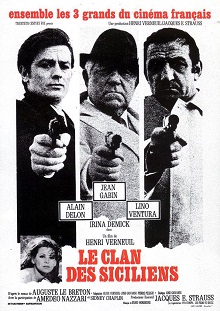
Having previously written the scores for the HenriVernueil-directed pictures “GunsForSanSebastián,” TheSicilianClan,” and “LeCasse” (aka “TheBurglars“), EnnioMorricone was once again enlisted by Verneuil, this time to compose the score for his new spy thriller, “LeSerpent.”
Album cover art (earlier pressing).
Side A of Morricone’s score for “IlSerpente” starts off weary and mournful, with a theme that would not be out of place in a romantic drama (at that inevitable point when the lovers part). As sad and wistful as things begin, they quickly turn jazzy and psychedelic, with grungy guitars, propulsive drums, and wailing electric keyboards. Then the Maestro slows things down again with strings, piano, and flute, another melancholy theme, veering on romantic. Heavy organs follow, furthering the “funeral music” vibe. A slower variation on the opening theme ends on a bittersweet note, before a traditional- sounding military march caps off the first half of the record.
Album cover art (earlier French pressing).
Side B kicks off with high tension from a string arrangement that recalls some of Morricone’sgiallo scores. Strange percussive sounds add to the uneasy feeling that might have the listener on edge as the strings become jagged razors.
Album cover art (Dagored pressing).
With the next track, Morricoene blurs the line between score and sound design, providing more mood and atmosphere than melody and rhythm.
Album cover art (Japanese pressing).
Taut, disorienting, and anxiety-inducing for the remainder of Side B, “IlSerpente” is not one of the Maestro’s most melodic compositions, but it very effectively creates the suspense and tension an international spy thriller requires.
CD album art.
Morricone would also go on to write the scores for Verneuil’s “PeurSurLaVille” (aka “FearOverTheCity“), starring Jean–PaulBelmondo (in one of his best action-star performances), and “I… For Icarus,” starring YvesMontand.
Album cover art.Album cover art.
With an impressive international cast of headliners (HenryFonda, YulBrynner, DirkBogard, PhilipNoiret, and VirnaLisi), “LeSerpent” (aka “NightFlightFromMoscow“) tells the story of a Soviet diplomat (Brynner) plotting his defection to America by trading a list of alleged Soviet double agents. As Brynner is taken into Fonda’s custody in the US, the names on his list begin getting knocked off, one by one.
HenryFonda has his eye on the slippery YulBrynner.YulBrynner as soviet spy, Col. AlexeiVlassov.Lobby card featuring Fonda and Brynner.Lobby card featuring Fonda.Alternate poster art.Alternate poster.More lobby cards.Italian poster.Japanese poster.
Links:
Listen to Morricone’s score for “IlSerpente” here:
“IlSerpente” score on YouTube.
Watch the trailer for “LeSerpent” here:
“LeSerpent” aka “NightFlightFromMoscow” trailer on YouTube.
Watch the complete film for free here:
Full film on YouTube.
If you are in the Toronto area, say hi to my Filmography co-host Bjorn, and find “Le Serpent” (as “Night Flight From Moscow“) at Bay Street Video here:
“We can’t rule out the possibility that he is a pervert.”
-Quote from “The Bird With The Crystal Plumage.”
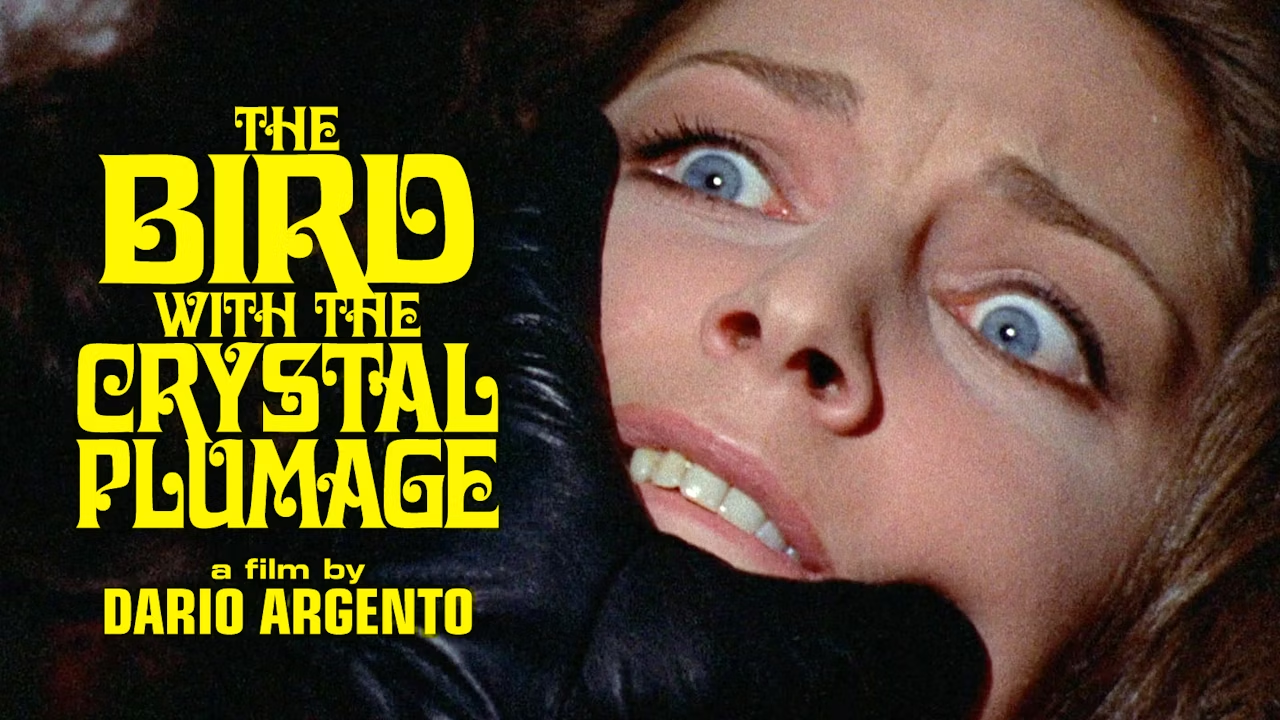
EnnioMorricone circa 1970, the year “The BirdWithTheCrystalPlumage” was released.Original theatrical poster.Spanish DVD art for “The Bird With The Crystal Plumage.”Italian DVD art for Arrow’s home video release of “TheBirdWithTheCrystalPlumage.”Front album cover art.Reverse album cover sleeve.Vinyl Side 1Vinyl Side 2
Morricone’s score for DarioArgento’s debut picture, 1970’s Rome-set thriller “TheBirdWithTheCrystalPlumage,” is the first of three scores the Maestro composed for Argento’s so-called “AnimalTrilogy” (followed swiftly by “The Cat O’ Nine Tails,” and “Four Flies On Grey Velvet“).
“The Cat O’ Nine Tails.““4 Flies On Grey Velvet.”
Morricone would later compose the music for Argento’s “The Stendhal Syndrome,” and “The Phantom Of The Opera,” bringing the total of Argento-directed films with Morricone scores to 5.
Of course, Argento was already an established screenwriter of note before making his directorial debut on “The Bird With The Crystal Plumage.” Argento penned the screenplays for the Morricone-scored pictures “Comandamenti Per Un Gangster,” “Once Upon a Time In The West,” “Metti Una Sera A Cena,” “Un Esercito Di 5 Uomini,” and “La Stagione Dei Sensei,” making it a 10 film-collaboration over four-decades.
“The Bird With The Crystal Plumage” director DarioArgento with the Maestro himself.
The “The Bird With The Crystal Plumage” score begins with a light touch, very much in the vein of Morricone’s more melodic lounge compositions, but things quickly get weird, with strange vocalizations, moans, and heavy breathing over sparse, jagged, anxiety-inducing discordant themes.
SuzyKendall and TonyMusante in “TheBirdWithTheCrystalPlumage.”
The effect is that Morricone’s score lulls you into a dreamy state before it strikes with dissonance and unnerving sounds meant to put you on a razor’s edge, only appropriate given the nature of the film to which this music belongs.
Tony Musante and a soon to be murder-victim in “TheBirdWithTheCrystalPlumage.”TonyMusante interviewed by the police in “TheBirdWithTheCrystalPlumage.”A staple of the giallo picture: the silhouette of a mysterious killer all in black.
Although it wasn’t the first (credit MarioBava‘s “The Girl Who Knew Too Much” with that honour) Argento’s oft-imitated suspense picture set the benchmark for the giallo genre.
The original giallo picture, Mario Bava’s “The Girl Who Knew Too Much”
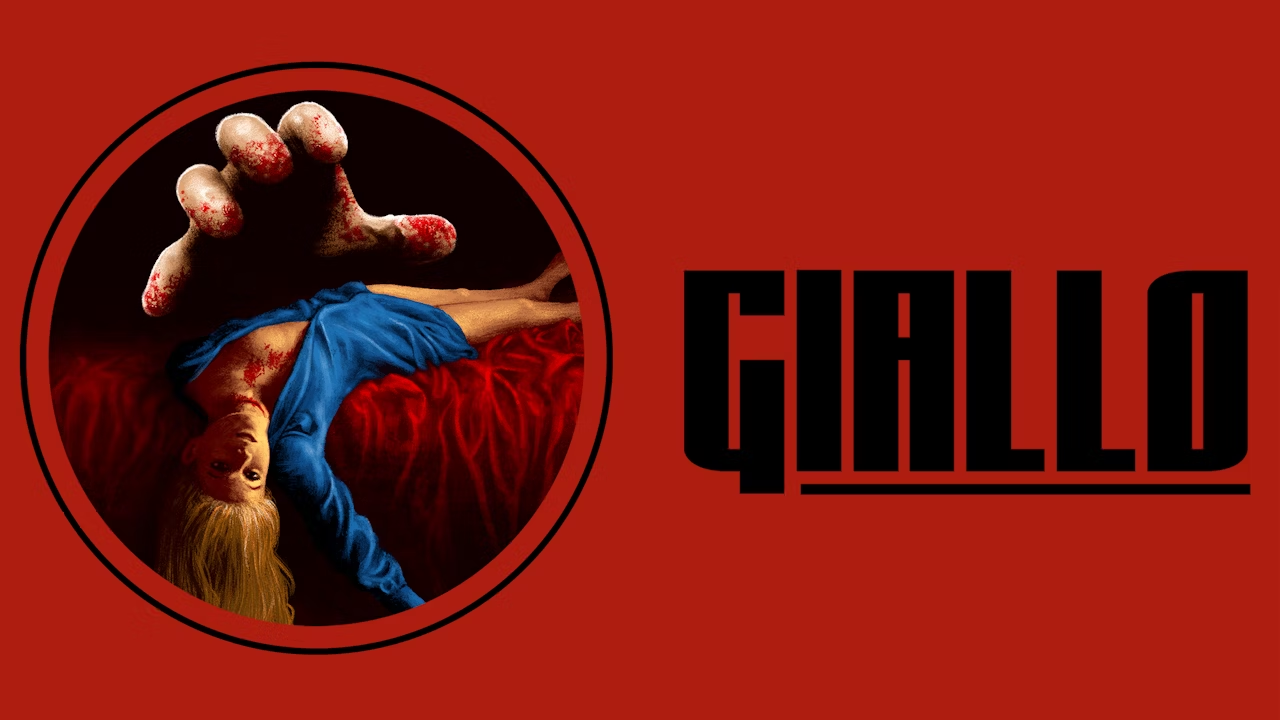
Literally translated as “yellow” from Italian, gialli are Italian thrillers that take their name from “Il Giallo Mondadori,” a series of popular Italian murder mysteries originally published by Arnoldo Mondadori Editore, with their iconic yellow jackets.
“Giallo” was an Italian literary genre before bleeding into Italian cinema.Argento wields the knife.
Argento was the best of the best in the giallo business, and has become synonymous with the genre, but there are many other classics to seek out, from LucioFulci’s “Don’tTorturea Duckling,” to one of my personal favourites, LuigiBazzoni’s “TheFifthCord” (also scored by Morricone).
Poster for LucioFulci’sgiallo classic.Poster for LuigiBazzoni’s giallo classic.
After you check out the soundtrack, don’t forget to see the film! And on the subject of gialli, ArrowVideo has been releasing a number of significant giallo pictures both on blu-ray and on their Arrow Player streaming app.
Visit the giallo section of ArrowVideo’s website here:
https://www.arrow-player.com/giallo-essentials
Along with Spaghetti Westerns (Italian westerns) and Poliziotteschi (Italian cop thrillers), the giallo sub-genre shows what a rich period the 1960s and ’70s were for Italian cinema. For more on everything giallo, check out the documentary “AllTheColorsofGiallo,” which is a fun deep-dive for fans of the genre and newcomers alike.
Watch the complete documentary “AllTheColorsofGiallo” here:
https://www.youtube.com/watch?v=MtdnC_wxevk
“AlltheColorsofGiallo” on YouTube.
And for more on poliziotteschi and why the ’60s and ’70s were the heyday for Italian genre cinema, check out the trailer for “Eurocrime: The Italian Cop & Gangster Films That Ruled The 70s” here:
If you are in the Toronto area, say hi to my Filmography podcast co-host Bjorn, and rent or purchase “The Bird With The Crystal Plumage” by visiting the last great video store, BayStreetVideo, in store or with the link below: