


With the success of 1970’s The Bird With a Crystal Plumage, the first instalment in Dario Argento’s so-called “Animal Trilogy” (also comprised of Cat ‘o Nine Tails and Four Flies on Grey Velvet – all three scored by Morricone), came a succession of gialli (Italian thrillers) with animals or insects in the title (Argento rival, Lucio Fulci’s Don’t Torture a Duckling and Lizard in a Woman’s Skin; Sergio Martino’s The Case of the Scorpion’s Tail, etc.).


Black Belly… was directed by fellow Italian filmmaker, Paolo Cavara.

Cavara helmed the infamous Mondo Cane; as well as Los Amigos, starring Anthony Quinn and this site’s favourite Italian superstar, Franco Nero).

Cavara’s film stars the always-watchable Giancarlo Giannini (7 Beauties; Hannibal) as a worn-out detective chasing a serial killer whose method of dispatchment involves injecting their victims with the poisonous venom of the titular arachnid before tearing their bellies open, much as a wasp would do to a tarantula.
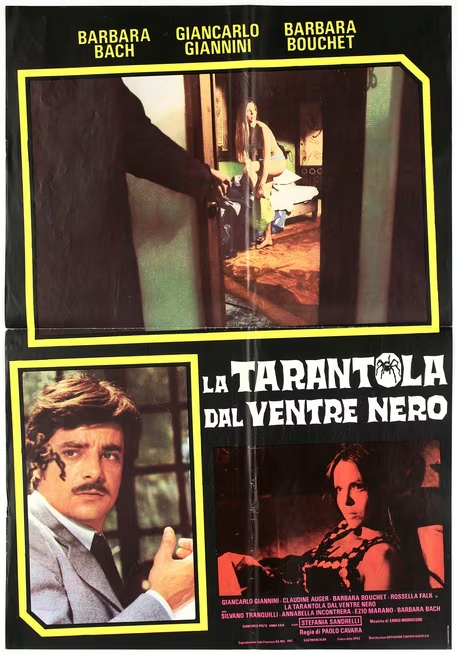
Giallo fans will appreciate the presence of both Barbaras – Bouchet (The Red Queen Kills 7 Times) and Bach (The Spy Who Loved Me).


Genre stalwarts, both Barbaras are, as always, effective, but underused, in roles that require little more from them than to be beautiful and frightened.


The picture is far from one of the best gialli, certainly inferior to the Argento pictures that inspired its title, but it’s well anchored by Gianni’s world weary portrayal of the detective, and buoyed greatly by the classic score from the Maestro.

According to our friends at ChatGPT:
Ennio Morricone’s score for The Black Belly of the Tarantula (La tarantola dal ventre nero, 1971) is one of his most striking contributions to the Italian giallo genre—sensual, icy, and psychologically disorienting.

Overall Character
The music blends eerie avant-garde textures with lush, melancholic melody, a contrast typical of Morricone’s giallo soundtracks. Rather than leaning on sharp, stabbing motifs (a common horror approach), he creates tension through softness, fragility, and restraint, which makes moments of violence feel even more disturbing.

Key Musical Features
- Breathy, wordless female vocals
Performed by Edda Dell’Orso, these ethereal lines float above the orchestration, suggesting both seduction and dread. They’re one of the score’s signature elements. - Hypnotic, pulsing rhythms
Morricone employs slow, repeating bass lines and low percussion to produce a sense of creeping inevitability—almost like the crawling movement of the film’s titular tarantula. - Unsettling instrumental colors
Whispery flutes, muted strings, and unusual electro-acoustic effects create an atmosphere of voyeuristic suspense, a hallmark of Morricone’s experimental 1970s work. - Melodic noir-like themes
Amid the tension, Morricone inserts a haunting, sorrowful theme that underscores the film’s emotional undercurrent, giving the thriller a surprisingly tragic tone.

Tone and Impact
The score is sensual but chilly, beautiful yet unnerving, and it plays a major role in shaping the film’s identity. Many listeners consider it one of Morricone’s defining giallo works, alongside his music for The Bird with the Crystal Plumageand Four Flies on Grey Velvet. Its mixture of avant-garde fear and hypnotic beauty has helped it remain a cult favorite among soundtrack collectors.

Track-by-Track Breakdown
Here’s a track-by-track style breakdown of Ennio Morricone’s score for The Black Belly of the Tarantula. Because the soundtrack exists in a few different releases with slightly different sequencing, this follows the commonly circulated track list while focusing on the major cues and themes.
1. La Tarantola (Titoli)
A whispery, suspended opening built on soft bass pulses, delicate bells, and wordless Edda Dell’Orso vocals. It sets the tone: dreamy, erotic, and quietly menacing. The rhythmic figure underneath already hints at “predator and prey.”
2. Ragnatela
One of the more experimental cues. Morricone uses plucked strings, tense tremolos, and fluttering woodwinds to mimic the sensation of being caught in a web. Nearly atonal, it provides pure psychological tension.

3. Filamento Rosso
A slow, sensual theme. The breathy vocals glide over an almost bossa-like rhythmic sway. Its beauty is deceptive—Morricone uses softness to create a sense of vulnerability, a recurring device in his giallo scores.

4. Visioni
A more melodic, melancholic cue. Sustained string chords and a wandering flute line paint a feeling of isolation and lingering threat. This is one of the most “cinematic” pieces in the score.
5. Le Donne Guardano
A motif representing observation, sexuality, and danger. Built on hypnotic keyboard patterns and muttering percussion. It has a voyeuristic quality, as if the camera were gliding through the scene.
6. Sospiri da una Telefonata
Sparse and anxious. The telephone motif uses sharp piano clusters and breathy exhalations, creating a sense of fragments in the dark. Classic Morricone suspense writing.
7. La Vittima
A tragic, almost resigned melody for strings, punctured by dissonant harmonies. It captures the helplessness of the killer’s victims without resorting to melodrama.
8. Morte di una Larva
One of the score’s creepiest tracks. The pacing is funereal, built from slow heartbeat-like percussion and hissing string textures. Morricone builds tension through understatement.
- Fuller orchestra
- More emotional pathos
- Less experimental texture work
9. Paura e Aggressione
More aggressive than most cues: sharp string attacks, swirling woodwinds, and disorienting tape effects. Morricone briefly allows chaos to take over—one of the score’s darkest moments.
10. Ossessione di un Delitto
A deep dive into the killer’s psychology. Low, throbbing electronics and whisper-level vocalizations create an obsessive, claustrophobic atmosphere.
11. Ritorno della Tarantola
A reprise of the main title idea, but thicker and heavier. The rhythm is slightly more pronounced, and the harmonic tension more explicit, as if the “tarantula” now fully reveals itself.
12. Finale
A return to the score’s melancholic side. Morricone ties together the sensual theme and the suspense material, ending on an unresolved chord—an echo of lingering danger and emotional residue.
Overall Themes and Structure
1. The “Sensual-Menace” Duality
Morricone alternates between:
- beautiful, soft, intimate writing, and
- nerve-shredding avant-garde experimentation
The contrast is what gives the score its iconic emotional shape.
2. Use of Voice as a Psychological Instrument
Edda Dell’Orso’s voice doesn’t function as melody alone; it becomes:
- a sigh,
- a whisper of fear,
- a symbol of vulnerability.
3. Organic, Crawler-Like Rhythms
Subtle percussion patterns mimic small, creeping movements, reinforcing the tarantula metaphor without becoming literal.
4. Minimalism over Bombast
Instead of loud stabs or shocks, Morricone builds unease through:
- slow pulses,
- fragile timbres,
- texture-based suspense.
Here’s a focused comparison between The Black Belly of the Tarantula and Ennio Morricone’s other major gialloscores. Morricone was one of the composers who defined the sound of the genre, but each of his giallo soundtracks has a distinct psychological angle.
Below is a clear breakdown by tone, musical technique, and narrative function.
Comparisons with Morricone’s Other Giallo Scores:

⭐ 1. The Black Belly of the Tarantula (1971)
Tone: Sensual + icy
Signature elements:
- Breath-heavy Edda Dell’Orso vocals
- Hypnotic, crawling bass patterns
- Soft, minimalist tension over explosive shocks
Psychological angle:
Fear through vulnerability; beauty as an instrument of dread.
This score’s hallmark is restraint: the horror comes from quietness, softness, and eerie eroticism.

2. The Bird with the Crystal Plumage (1970)
Tone: Childlike innocence + psychological fragmentation
How it compares:
Where Tarantula uses sensuality and icy surfaces, Bird uses infantile motifs (especially the la-la-la female vocals) to create a disturbed inner psyche.
- More overt avant-garde writing (clusters, tape manipulations)
- A more explicitly fractured, neurotic sound
- More prominent dissonance and rhythmic instability
Similarity: heavy use of the female voice as psychological symbol.
Difference: Plumage is far more jagged and surreal; Tarantula is smoother, hypnotic, and suffocatingly controlled.

3. Four Flies on Grey Velvet (1971)
Tone: Paranoia + urban nervous energy
How it compares:
This score is more rock-influenced, with electric guitars, drum kit, and psychedelic textures.
- More rhythmic drive
- More overt danger cues
- More “external” threat, less “internal” psychological disintegration
Similarity: experimental sound design and Morricone’s love of unconventional timbres.
Difference: Four Flies is edgy and modernist; Tarantula is intimate and atmospheric.

4. Cat o’ Nine Tails (1971)
Tone: Clinical + suspenseful
How it compares:
This score has a colder, more analytical feeling—reflecting its plot about genetic experiments.
- Glassy piano sonorities
- Clean lyrical themes mixed with sterile, precise tension cues
- Less sensuality; more investigative feel
Similarity: both rely on textures more than melody for suspense.
Difference: Tarantula feels humid and erotic; Cat o’ Nine Tails feels dry, sterile, scientific.

5. Lizard in a Woman’s Skin (1971)
Tone: Dreamlike + hallucinatory
How it compares:
This score is Morricone at his most lysergic: swirling orchestration, surreal dream sequences, and expressionistic choral writing.
- More colorful orchestration
- More impressionistic harmony
- Larger emotional range (from horror to quasi-spiritual passages)
Similarity: both use the female voice as a sensual-psychological instrument.
Difference: Lizard is psychedelic; Tarantula is cool and knife-like.

6. Spasmo (1974)
Tone: Minimalist dread + psychological erosion
How it compares:
This is Morricone’s closest relative to Tarantula in terms of whispered tension and internal anxiety, but it’s even more minimal.
- Sparse notes
- Very slow build-ups
- Less melodic; more atmospheric
Similarity: hypnotic, creeping suspense built on subtle patterns.
Difference: Spasmo is bleaker and more abstract; Tarantula is melodic by comparison.

Summary: What Makes Tarantula Unique Among Morricone’s Giallo Scores
1. Most sensual/erotic use of fear
Other scores use psychological distress or surrealism; Tarantula uses softness and breath.
2. One of his most minimalist yet melodic
Few notes create the entire atmosphere; the beauty itself is the threat.
3. Strongest integration of rhythm as metaphor
The subtle pulse—slow, crawling, inevitable—evokes the tarantula motif without gimmick.
4. Edda Dell’Orso’s voice at its most haunting
Here it becomes a whisper in the dark, rather than the childlike or operatic functions in other films.
OTHER PRESSINGS:


THE MUSIC:
Listen to the complete score on YouTube.